
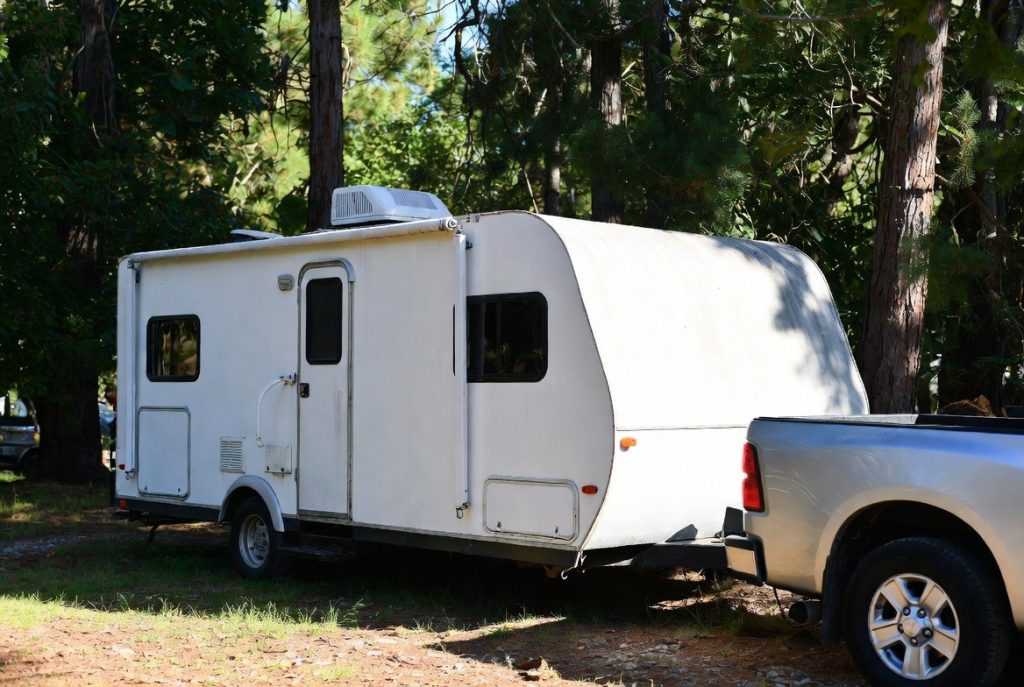
Your auto policy covers your travel trailer — until it doesn’t. The liability coverage from your tow vehicle extends to the trailer while it’s attached and in motion. Everything else — contents, detached-trailer liability, collision damage to the trailer itself — is almost certainly not covered by your standard auto policy. The gap between what people assume is covered and what’s actually covered tends to become clear at the worst possible moment.
Trailer Coverage Under a Standard Auto Policy: The Short Version
When your trailer is hitched to your vehicle and you cause an accident, your auto liability coverage extends to the trailer. If another driver is injured or their vehicle is damaged because your trailer came loose or was involved in the collision, your auto liability responds. That’s the coverage you get automatically, and it’s meaningful — but it’s the only meaningful coverage your standard auto policy provides for the trailer.
Physical damage to the trailer itself — whether from a collision, a backing accident, or road debris — is generally not covered under your auto policy. Neither are the contents inside the trailer, which for a well-equipped camper might represent $10,000–$30,000 in camping gear, electronics, and personal property. And once the trailer is unhitched and parked at a campsite, even the liability extension goes away.
What’s Never Covered Without an Endorsement
Contents: Your auto policy does not cover personal property inside a trailer, period. If your camper is broken into or catches fire and you lose $8,000 in gear, you’ll file a claim on your homeowners or renters policy — assuming those policies extend to off-premises personal property, which most do up to a sublimit, typically 10% of your personal property coverage. Check your homeowners declarations page before assuming this coverage exists.
Vacation or campsite liability: If someone trips on your trailer step at a campground and is injured, that’s a liability exposure that neither your auto policy nor your standard homeowners policy may cover. Vacation liability endorsements — available from RV and camper specialty carriers for $25–$75 a year — fill this gap explicitly.
Roadside assistance for the trailer: Most auto roadside programs don’t cover a disabled trailer separately from the tow vehicle. If the trailer has a blown tire or axle failure, you may be on your own for the service call.
Full-Time RV vs. Recreational RV: Two Different Policies
If you use your RV or travel trailer as your primary residence — spending more than six months a year living in it — standard auto and homeowners policies are the wrong products entirely. Full-time RV insurance is a specialized product that combines auto liability for the vehicle, liability coverage at campsites, and personal property coverage for your belongings, structured for someone whose RV is both a vehicle and a home.
Recreational RV insurance is a better fit for seasonal use — weekend trips, a few extended vacations per year. It typically covers physical damage to the unit, liability while attached and while parked, contents up to a specified limit, and emergency expense coverage if the unit is damaged far from home. Annual premiums for a well-equipped travel trailer policy run $300–$700, depending on the trailer’s value, the coverage limits chosen, and your state.
Storage Months and How They’re Priced
Most RV and trailer policies offer a storage or lay-up endorsement for months when the unit isn’t being used. During storage months, you keep comprehensive coverage (protecting against theft, fire, and weather) while suspending collision and liability. The savings are typically 40–60% of the full-coverage premium for those months.
The practical note: “storage” has a definition in your policy. If you pull the trailer out of storage for a single weekend trip in January, you need to reinstate full coverage before that trip. Some carriers handle this with a simple phone call and prorate the premium; others require a policy change with a few days’ notice. Know which you have before you need it.
What to Do This Week
- Check your auto policy declarations page for any trailer endorsements or noted coverage.
- Review your homeowners policy for off-premises personal property sublimits — this is your contents coverage for the trailer right now.
- Get a quote for a standalone travel trailer or RV policy if you own a trailer worth more than $10,000.
- Ask specifically about vacation liability endorsements — they’re inexpensive and address a gap most people don’t think about until they’re at a campground.
Ready to put this to work? Pull your current declarations page and compare it against these benchmarks — or run a fresh quote to see where the market has moved since your last renewal.
Last modified: January 23, 2026
About the Author: Alex Morgan