
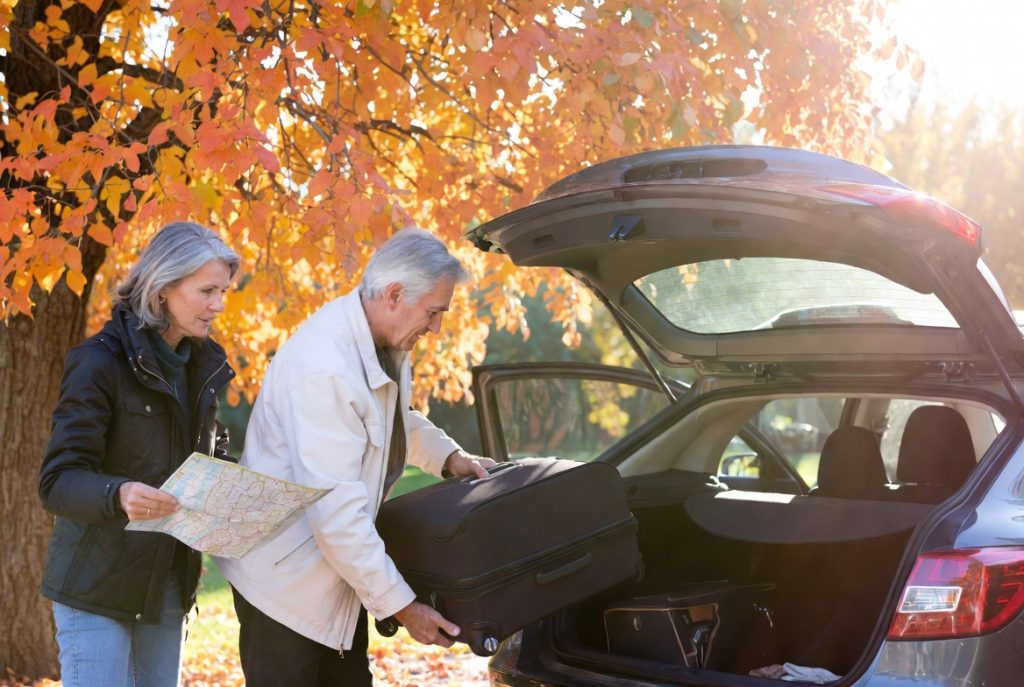
If you spend three to five months a year in another state, your auto policy isn’t quietly handling the arrangement — it’s operating under assumptions that may or may not hold up if you file a claim in February from your Florida address when your policy lists a Michigan home. The fix is unglamorous and mostly paperwork, but getting it wrong is expensive in exactly the situations where you most need coverage to work.
The “Primary Garaging” Question, Finally Answered
Your auto policy is rated based on where the vehicle is primarily garaged overnight. “Primarily” means the majority of nights per year — typically interpreted as more than 183 nights. If you spend five months in Florida and seven months in Ohio, Ohio is your primary garaging state. If you spend six months in each state, you and your insurer need to have an explicit conversation about which address controls the policy.
Why it matters: insurance is regulated by state, which means your premium is calculated using your home state’s rate tables, minimum requirements, and coverage options. If your vehicle spends significant time in a second state — particularly if that state has different liability minimums, PIP requirements, or uninsured motorist rules — your carrier needs to know. Most large carriers are licensed in all 50 states and can accommodate snowbird situations with a notation on the policy. Regional carriers may not be, in which case you may need a separate policy for the southern months.
Storage Policies — When They Make Sense
If you leave one vehicle behind — a northern vehicle that stays in the garage from November through March — you can convert it to a storage or comprehensive-only policy during the months it’s not being driven. This typically saves 50–65% of the full coverage premium for those months, because you’re removing collision and liability while keeping protection against theft, weather, and fire. The savings on a $1,200-a-year policy might be $300–$400 for a five-month storage period.
The critical detail: the vehicle must truly not be driven. If your adult child pops in over the holidays and takes it to the grocery store, you have a liability exposure with no liability coverage. Reinstatement of full coverage is usually quick — often same-day by phone or app — but it has to happen before the vehicle moves, not after an accident.
Crossing State Lines: Insurance vs. Registration vs. Residency
These three are related but not identical, and conflating them creates problems. Insurance follows the vehicle’s primary garaging address. Registration follows state law, which varies — some states require registration within 30, 60, or 90 days of establishing residency. Residency is a legal determination based on domicile, voter registration, driver’s license, and tax filing — not simply how many days you spend somewhere.
For most snowbirds, the practical answer is: keep your vehicle registered and insured in your primary home state, update your insurer about the seasonal garaging pattern, and make sure you don’t accidentally establish legal residency in the second state by using that address for tax or licensing purposes. If you do establish dual residency, talk to an insurance agent and a tax advisor at the same time — the implications run beyond your car insurance.
Dual-Vehicle Households
If your household keeps one vehicle in each state — a common arrangement — each vehicle should be insured and registered in the state where it primarily lives. This means potentially two separate policies or a multi-state policy with your carrier. The benefit: each vehicle is rated correctly for its location’s risk profile, which may actually lower your total premium compared to trying to rate a Florida-garaged vehicle as a Michigan vehicle.
A Clean 12-Month Rhythm
- September (before heading south): Notify your insurer of southern garaging start date. Initiate storage policy on northern vehicle if applicable.
- October: Confirm coverage is active and correctly rated for the southern address. Check that liability limits meet the southern state’s minimums.
- April (before heading north): Reinstate full coverage on northern vehicle. Notify insurer of return to northern garaging address.
- At each renewal: Review that both garaging addresses are correctly reflected and that the policy hasn’t defaulted to a single-state assumption.
What to Do This Week
Count the nights you spend in each state in a typical year. If either state gets more than 120 nights, call your carrier and describe your actual pattern. Ask specifically: “Is my vehicle correctly rated for my garaging situation, and do I need any endorsement or notation on the policy for my time in [second state]?” Get the answer in writing — or at minimum, note the date, the representative’s name, and what they told you.
Ready to put this to work? Pull your current declarations page and compare it against these benchmarks — or run a fresh quote to see where the market has moved since your last renewal.
Last modified: January 21, 2026
About the Author: Alex Morgan