
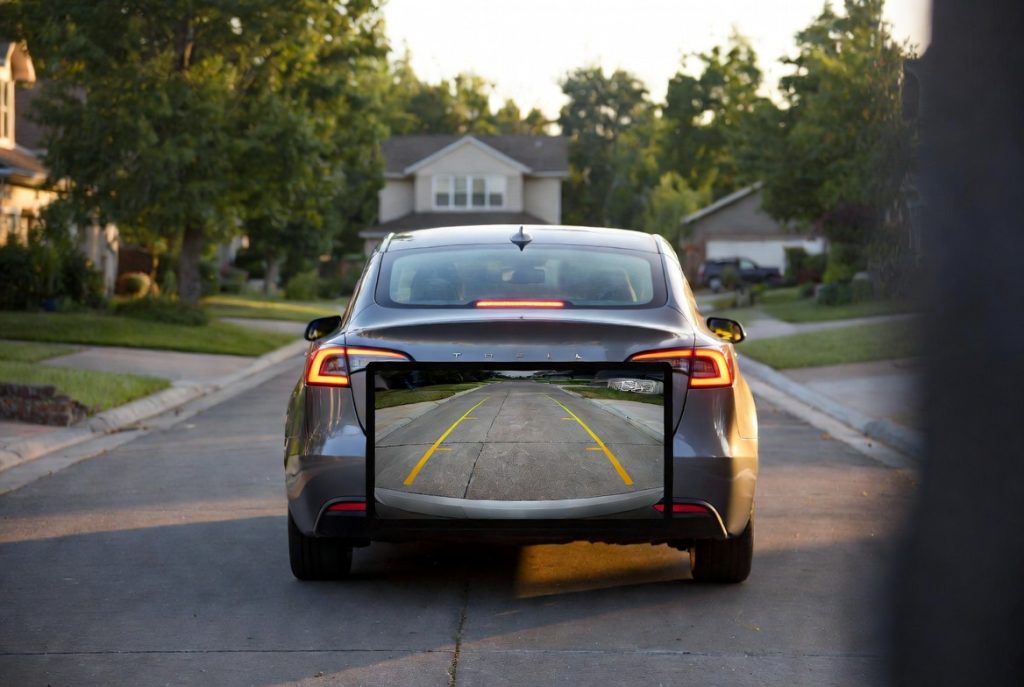
Backing out of your own driveway is one of the most common — and most under-reported — accident categories in suburban America. NHTSA estimates roughly 15,000 backing accidents occur daily in the U.S., with driveways accounting for a disproportionate share of them. The accidents are usually slow, frequently expensive enough to be annoying but below the threshold of “serious,” and persistently misunderstood in terms of how fault is assigned and what they actually do to your rate. Here’s the honest picture.
What the Data Actually Shows
Backing accidents cluster in three scenarios: backing into a vehicle on the street, backing into a stationary object (a gate, a post, a neighboring vehicle), and being struck by another driver while backing. The third scenario — being hit while you’re the one reversing — is where most drivers get confused about fault.
Statistically, the driver in motion (you, reversing) carries a higher default liability assumption in most jurisdictions, regardless of what the other party was doing. A vehicle backing out of a driveway onto a public road is, in most state traffic codes, the vehicle that yielded the right of way. If there’s a collision during that maneuver, proving that the other driver contributed to the accident is possible but requires documentation — which most backing accidents don’t generate.
The frequency also matters. Insurance actuarial data shows that drivers with one backing accident claim are moderately more likely to file a second within three years than drivers with a clean record. This is partly behavioral (drivers who don’t adjust their habits repeat the scenario) and partly sampling bias. Either way, carriers have priced it in.
How Fault Gets Assigned at Low Speed
Low-speed doesn’t mean low-fault. An at-fault determination on a 5 mph backing incident carries the same rating impact as a 35 mph intersection collision in most policy structures.
Fault in a driveway backing accident is assigned based on:
- Which vehicle had the right of way (stationary vehicle on a public street almost always wins this question)
- Whether the backing driver had reasonable visibility and used it (hence the importance of backing cameras, which are relevant to fault but not dispositive)
- Whether the other driver was speeding, inattentive, or driving illegally (contributory negligence, which is relevant in some states and not others)
- Physical evidence — where the damage is on each vehicle relative to its direction of travel
The practical reality: in most suburban driveway incidents, you will receive some portion of fault if you are the reversing vehicle. Whether that’s 100% or a shared allocation depends on the facts and your state’s negligence rules. Comparative fault states (most of them) may assign 20% to the other driver for speeding, leaving you with 80% of the liability — still an at-fault determination for rating purposes.
The “Small Claim” Trap
This is where most families make the decision they later regret. The damage is $1,400. Your collision deductible is $500. The net claim to the insurer is $900. You file, the repair gets done, and three months later your renewal comes back 18% higher — and stays there for three years.
The math on surcharges: an 18% surcharge on a $1,800 annual premium is $324 per year. Over three years, that’s $972 in cumulative premium increases. You filed a claim to recover $900. The net result, before accounting for any deductible impact on future claims, is approximately break-even — and that assumes an 18% surcharge, which is on the lower end of what at-fault accident penalties can look like.
The break-even threshold — the point at which filing a claim costs you roughly as much in surcharges as it saves in repair costs — is typically $2,000 to $3,500, depending on your carrier, state, and current premium level. Claims below that threshold deserve a deliberate “file or don’t file” conversation, not a reflexive call to your carrier.
The complication: if you don’t file and the other driver does — or if there are injury claims — your decision to pay out of pocket becomes complicated quickly. The prudent approach for any accident involving another vehicle or a person: report the incident to your carrier without necessarily filing a claim. Your policy likely requires timely notification of incidents; this protects you legally while preserving your option to absorb the repair yourself.
Three Habit Changes That Move the Needle
1. Back in wherever possible
Counterintuitively, backing into a parking space when you arrive — rather than pulling forward in and backing out later — reduces backing accident risk significantly. When you back in at arrival, visibility conditions are often better, you’re moving more slowly, and you’re not yet in a hurry. When you back out at departure, you’re often rushed, visibility is blocked by adjacent vehicles, and there’s active pedestrian and vehicle traffic. Back-in parking is standard safety practice in fleet vehicles and commercial drivers; it translates directly to a personal vehicle.
2. Exit the vehicle to check clearance on tight reverses
This sounds like advice no one will follow. In practice, the 20 seconds it takes to step out and look behind the vehicle before executing a difficult reverse eliminates roughly half of all driveway object-contact incidents. The incidents that cost families $400 to $2,000 in bumper and gate damage happen when a driver assumes clearance exists. Taking away the assumption takes away the incident.
3. Know your surcharge threshold before the next incident
Call your agent or log into your carrier’s app and ask a specific question: “What is my premium impact if I file an at-fault accident claim?” Some carriers will tell you the exact surcharge percentage. Others will describe a tier system. Either way, you want to know the number before you’re standing in a driveway with a damaged bumper trying to make a real-time decision.
What to do this week: Look up your collision deductible, estimate your annual premium, and calculate your break-even claim threshold using the framework above. Write that number down and put it in your phone’s notes app. The next time you’re in a minor fender-bender, you’ll have the information you need to make the right call in the first 10 minutes.
Ready to put this to work? Pull your current declarations page and compare it against these benchmarks — or run a fresh quote to see where the market has moved since your last renewal.
Last modified: February 25, 2026
About the Author: Alex Morgan