
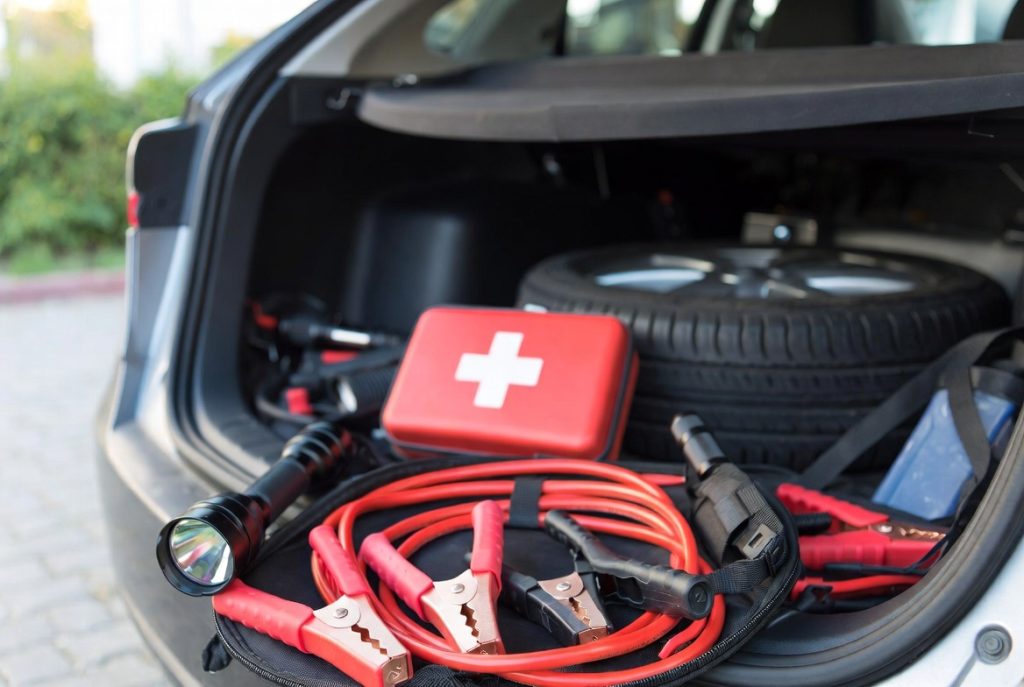
A real emergency kit is the cheapest insurance you’ll never file a claim against. The problem is that most family car kits were assembled from a gift set five years ago and haven’t been touched since — which means the batteries are dead, the bandages are expired, and there’s a foil emergency blanket that will disintegrate if you actually try to use it. Here’s what to actually carry in a family car as of spring 2026, and what to quietly retire from the old list.
The Non-Negotiables (8 Items)
These are the items that have proven their value across thousands of roadside scenarios. If your kit doesn’t have all eight, start here.
- Jumper cables — 20 feet minimum, 4-gauge or heavier. The 10-foot, 6-gauge cables in most gift kits are fine for compact cars in warm weather. For families with SUVs, minivans, or any hybrid-adjacent vehicle in the household, you need heavier cable to handle the amperage without heat buildup. If your home has a hybrid or plug-in, also carry a set of jumper cables rated for AGM batteries — they have a different internal resistance profile than lead-acid.
- Battery-powered or hand-crank jump starter. Portable lithium jump starters have become reliable enough that a $60–$90 unit from a reputable brand will start a dead 6-cylinder reliably. They eliminate the need for a second vehicle entirely.
- Reflective LED road triangles (3-pack). See the “what to retire” section below regarding flares. LED triangles are visible at 1,500 feet, run for 20+ hours on a battery, and don’t create a fire risk near spilled fluids.
- First aid kit — current expiration dates. Pre-packaged kits have individual item expiration dates. Check them annually. Bandage adhesive degrades. Antiseptic wipes dry out. A quality 100-piece kit runs $20–$35 and should be replaced or restocked every two years.
- Tire inflator with sealant. A 12V inflator — the kind that plugs into your 12-volt outlet — handles slow leaks and underinflation. Pair it with a can of tire sealant for punctures under 1/4 inch. Neither replaces a spare, but together they get you to a shop in most non-catastrophic scenarios.
- Multi-tool or basic tool kit. You need a flathead, Phillips, pliers, and a knife blade. That’s it. Don’t over-engineer this.
- Flashlight or headlamp with fresh batteries — or USB rechargeable. A headlamp is better than a flashlight for roadside work because it keeps both hands free. USB rechargeable units eliminate the dead-battery problem if you top them off with your car charger twice a year.
- Phone charger cable and 12V adapter. This is infrastructure at this point, not an emergency item per se. But being stranded with a dead phone in 2026 is avoidable and the cables to avoid it cost $12.
The Seasonal Swap (2 Items)
Spring 2026 means rotating out the winter kit and rotating in two season-appropriate items.
- Rotate out: Ice scraper, traction mat, or sand bag if you’ve been carrying them. Free up the space.
- Rotate in — sunshade and cooling towels. If you regularly drive with kids and face a breakdown scenario in summer heat, a reflective sunshade and a package of cooling towels (they activate with water) are inexpensive and genuinely useful in a 30-minute wait-for-roadside-assistance situation.
- Rotate in — rain poncho (2-pack). Spring weather is unpredictable. A flat-packed poncho takes up less space than a folded paper towel.
The “Kids in the Car” Additions
Families driving children regularly have a few non-negotiable additions to the standard kit.
- Shelf-stable snacks with a 12-month shelf life. Nut butter pouches, individual-serving granola bars, and dried fruit packets are calorie-dense, don’t melt, and survive summer heat better than most people expect. Rotate them annually.
- Small activity kit. A pad of paper, a few colored pencils, and a couple of small books or card games. A 20-minute roadside wait feels very different with a bored 8-year-old versus an occupied one.
- Extra set of kids’ medications if relevant. If your child carries an epinephrine auto-injector or rescue inhaler, a backup belongs in the car kit with a clear expiration date marked on the bag.
- Gallon of water. Not optional. This covers hydration in a summer breakdown, cleaning a wound, and topping off a cooling system.
What to Retire from Older Kit Lists
- Road flares. They’re a fire hazard near any leaked fuel, they’re banned in some states, and LED alternatives are strictly superior in every measurable way.
- Bulky wool blanket. Mylar emergency blankets have replaced these for trunk storage purposes. If you want genuine warmth in a breakdown scenario, a compact fleece throw takes less space.
- Fix-a-flat in original can. Older cans of tire sealant degrade and can make the interior of your tire uncorrectable. Replace any can older than three years.
- Paper maps of states you’ve never driven through. Keep a regional map if you travel off-network frequently. Retire the atlas from 2018.
What to do this week: Open the trunk, pull out whatever kit or bag is in there, and check three things: jumper cable gauge, first aid expiration dates, and whether your flashlight batteries are functional. Those three checks take less than 10 minutes and cover the most common failure points.
Ready to put this to work? Pull your current declarations page and compare it against these benchmarks — or run a fresh quote to see where the market has moved since your last renewal.
Last modified: February 11, 2026
About the Author: Alex Morgan