
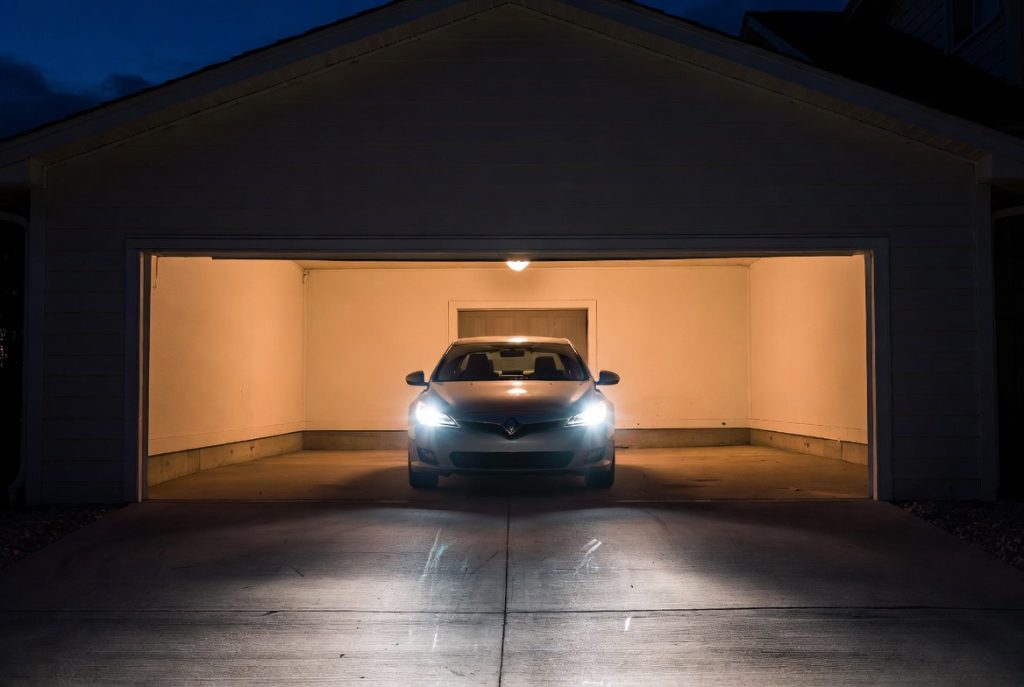
Insurers care about your overnight parking spot more than most homeowners realize. The exact line on your declarations page — garaged, driveway, or street — can move your premium by 5–15%, and updating it after you’ve built a new garage or moved to a different neighborhood is one of the simplest rate adjustments available. Here’s what carriers are actually measuring, and what the honest conversation with your insurer looks like.
How Carriers Actually Rate Your Parking Situation
Your garaging address and parking type show up on your policy as a rated factor, not a footnote. Carriers use a combination of ZIP-code-level claim data and the physical location of your vehicle overnight to estimate comprehensive risk — theft, vandalism, weather damage, and collision from parked impacts. The same car parked in a locked private garage in a low-crime suburb carries a materially different risk profile than the same car left on a street in a dense urban ZIP code. Carriers price that difference explicitly.
The garaging address also determines which state’s regulations apply to your policy, which matters if you’ve moved recently or spend significant time in another location. Using a different garaging address than your actual overnight parking location is considered a material misrepresentation — and we’ll get to why that matters at claim time.
The Three Biggest Premium Movers
Comprehensive claim frequency by parking type: Vehicles parked on public streets have significantly higher theft and vandalism claim rates than garaged vehicles. Insurers typically see 20–40% higher comprehensive claims on street-parked vehicles compared to garaged ones, though this varies considerably by geography. A locked attached garage in a low-crime ZIP is the gold standard; street parking in a high-density ZIP is the other end of the spectrum.
Collision exposure from parked impacts: Street-parked vehicles are also clipped, side-swiped, and hit-and-run targets at higher rates than vehicles in driveways or garages. This feeds into your collision risk factor, not just comprehensive. Carriers in dense metro areas may surcharge for known high-risk street parking corridors in a way that isn’t visible to you directly — it’s baked into the ZIP-level pricing.
Weather and environmental exposure: Hail, wind, and falling-object claims are more common on unprotected vehicles. A carport provides modest protection; a fully enclosed garage provides substantially more. Some carriers have a specific “carport” category; others group it with “driveway.” Ask explicitly which category your covered structure falls into.
When Updating Your Garaging Address Saves Money
Three situations where notifying your carrier immediately makes financial sense: you’ve moved to a lower-density address, you’ve built or rented access to a private garage, or your teen driver has moved to a college campus with different parking conditions. In all three cases, the update should happen within 30 days of the change — most policies have a provision requiring prompt notification of garaging changes. The savings can be modest ($50–$150 annually in many cases) or substantial ($200–$400 annually if you’re moving from a high-crime urban ZIP to a suburban or rural address).
When Honesty Wins (and Why Fibbing Backfires)
It’s tempting to list your vehicle as “garaged” when it mostly lives in the driveway, or to use a parent’s address in a lower-rate ZIP. Both create real exposure at claim time. If your vehicle is stolen from a location inconsistent with your declared garaging address, your carrier has grounds to investigate whether your policy was accurately rated — and in some states, to deny or reduce the claim on material misrepresentation grounds. The premium savings from misrepresenting your parking situation are typically $100–$300 a year. The downside is a denied claim on a vehicle worth $15,000–$40,000. That math doesn’t work.
The correct move: if your parking situation is genuinely mixed — garage in winter, driveway in summer — tell your carrier. Many will rate you on your primary situation and note the seasonal variation. If you’ve recently gained consistent access to a garage, update the policy and ask for the adjustment to be applied at your next billing cycle.
What to Do This Week
- Pull your declarations page and find the garaging address and parking type listed.
- Confirm they match your actual overnight situation for the majority of nights per year.
- If you’ve moved, built a garage, or changed parking in the past 12 months, call your agent or update online and ask what the adjusted premium looks like.
- If you have a teen at college, update their vehicle’s garaging address to the campus address — it may lower or raise the premium depending on the campus location, and your policy needs to reflect reality either way.
Ready to put this to work? Pull your current declarations page and compare it against these benchmarks — or run a fresh quote to see where the market has moved since your last renewal.
Last modified: January 12, 2026
About the Author: Alex Morgan