The same dashcam that protects you from a fraudulent claims dispute can quietly create a different kind of problem if it records the wrong people in the wrong state. Families who install cameras for legitimate safety reasons — and most reasons are legitimate — often haven’t thought through the audio recording question, the carpool scenario, or what happens when the footage actually gets used. Here’s the family-friendly framework for getting the protection without the exposure.
One-Party vs. Two-Party Consent States, in Plain English
Video recording inside a vehicle is legal in all 50 states under specific conditions. The complexity enters with audio.
One-party consent means that as long as one person in the conversation agrees to be recorded — which, when you’re the driver and the one turning on the camera, is you — the recording is legal. About 38 states operate under one-party consent rules for audio.
Two-party (or “all-party”) consent means everyone being recorded must know about and agree to it. States with all-party audio consent include California, Florida, Illinois, Maryland, Massachusetts, Michigan, Montana, Nevada, New Hampshire, Oregon, Pennsylvania, and Washington. If you drive through or live in any of these states and your dashcam records audio without notifying passengers, you may be violating wiretapping law — which is a criminal statute in most of these jurisdictions, not just a civil one.
The practical solution used by most dashcam owners in all-party states is simple: disable the interior microphone, or post a visible notice on the camera itself that audio recording is in progress. A small sticker on the dash that says “Audio/Video Recording in Progress” has been held in several state court cases to constitute reasonable notice. It’s not a perfect legal shield, but it’s the standard that careful users follow.
Where Your Kids’ Rides Fit In
Recording your own children in your own vehicle is generally unambiguous — you have parental authority over minors in your household. The complication arrives when other people’s children are in your car.
Carpool situations — driving neighborhood kids to school, sports, or activities — put non-family minors in your vehicle. Recording them raises two separate questions: consent law (which applies to audio) and privacy expectations (which is murkier and varies by context). In all-party consent states, you technically need consent from a parent or guardian of any minor you’re audio-recording.
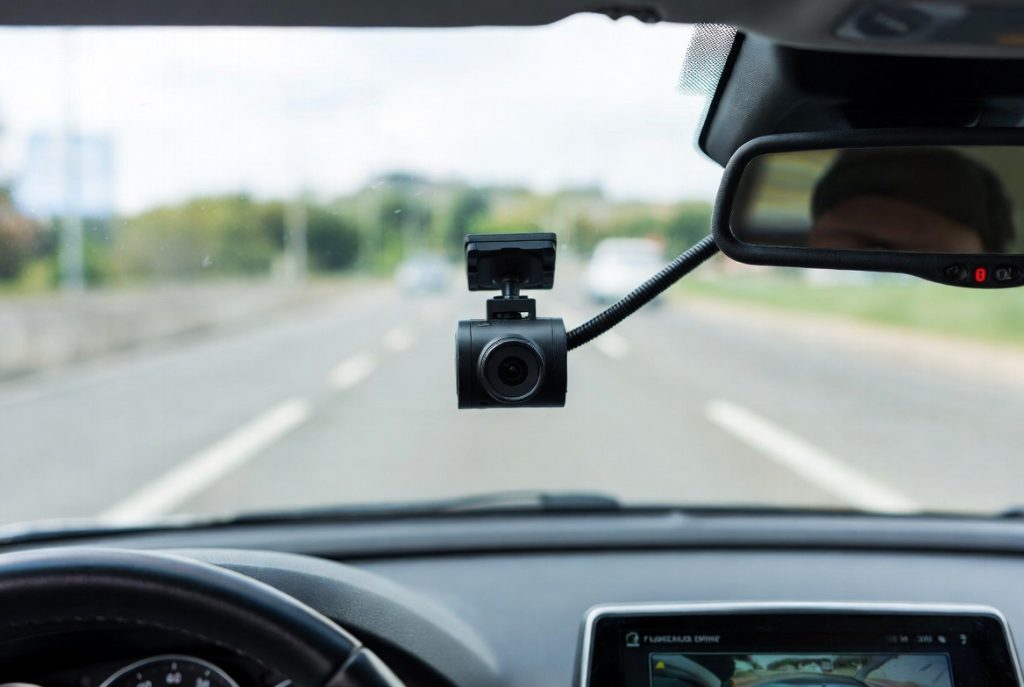
For families who regularly carpool, the cleanest solution is a forward-facing-only camera that records the road and the exterior environment, not the cabin interior. This gives you the accident documentation value without the passenger recording complexity. If you do run a cabin camera, have audio disabled or send a one-time message to the other parents letting them know: “We have a dashcam that records video and audio in the car. Let me know if you have any concerns.” Most parents will respond positively — it’s a safety feature — and you’ve created a reasonable consent record.
Storage and Sharing — The Everyday Compliance Habits
Most dashcams record on a loop, overwriting the oldest footage when the card is full. For protection purposes, you need to understand your camera’s loop length — typically 1 to 3 hours on a 64GB card — and what triggers a “protected” file save. Most cameras automatically protect a clip when an impact sensor triggers. Make sure that feature is enabled.
When it comes to sharing footage:
- With your insurer: You can share footage voluntarily. You are not required to. If the footage clearly shows the other driver’s fault, it’s almost always in your interest to share it.
- With law enforcement: Officers at the scene may ask to view your footage. You can comply or decline at the scene. If a subpoena is issued, you comply. Keep footage from any accident for at least 90 days regardless of whether a claim is filed.
- On social media: Don’t. Even footage that clearly favors you can create legal complications if it’s shared publicly before a claim is resolved. Anything you post can be subpoenaed.
How Insurers Actually Use Dashcam Evidence
Carriers don’t have a formal dashcam submission portal in most cases. What they have is an adjuster who will ask whether you have footage if there’s any dispute about fault. At that point, the footage becomes part of your claim file.
Studies on claim outcomes show that dashcam footage increases the likelihood of a favorable fault determination for the camera owner by 40–60% in disputed liability cases. That translates directly to whether your rate goes up at renewal. A not-at-fault determination on your record is neutral. An at-fault determination — even a partial one — can trigger a surcharge of 15–30% for three years depending on your carrier and state.
The honest bottom line: a $80–$150 dashcam that prevents a single disputed at-fault determination pays for itself many times over in avoided surcharges. The legal compliance piece is worth 20 minutes of your attention before you mount it — not after.
What to do this week: Check whether your state is on the all-party consent list. If it is, verify whether your camera’s microphone is enabled and decide whether to disable it or post a notice. If you carpool other families’ kids, send a quick heads-up message to those parents this week.
Ready to put this to work? Pull your current declarations page and compare it against these benchmarks — or run a fresh quote to see where the market has moved since your last renewal.
Last modified: February 14, 2026
About the Author: Alex Morgan