Almost every auto policy in America will replace a car seat after a covered crash. Most parents don’t know it. Most claims adjusters don’t proactively mention it. The benefit sits quietly in your policy, under the personal property or comprehensive coverage language, and the only way to use it is to know it’s there and ask for it specifically. Here’s how to actually use it — and what to do with the seat in the meantime.
The Replacement Coverage Almost Every Policy Includes
Car seat replacement after an accident is covered under your auto policy’s personal property provisions in most cases. The coverage typically applies when the vehicle is involved in a collision covered by your policy — meaning the collision coverage limit applies — and the car seat was installed in the vehicle at the time of the accident.
The typical reimbursement range is $500 to $1,000, which covers most convertible car seats and infant carriers currently on the market. Some high-end seats (extended rear-facing seats with premium price tags, for instance) run $300–$500 individually, and replacement costs for two seats in a family vehicle can push into the $700–$900 range. The coverage usually absorbs this without requiring you to reach your collision deductible separately — the seat is treated as personal property damaged in the covered event, not as a separate collision claim trigger.
The practical requirement: you need to file specifically for the seat. It doesn’t get flagged automatically by the adjuster working your collision claim. You bring it up, you provide a receipt or model number, and it gets processed as a supplement to the primary claim.
When It Kicks In (and When It Doesn’t)
Coverage applies when:
- The vehicle was involved in a collision that you’ve filed a claim for under your collision coverage
- The seat was physically installed in the vehicle (not in the trunk, not in the house)
- The seat model and purchase price can be documented
Coverage typically does not apply when:
- The accident is so minor that you elect not to file a collision claim (more on this tradeoff in a moment)
- The vehicle was involved in a non-collision comprehensive event — though some policies do extend coverage here; ask specifically
- The seat was expired at the time of the accident (expiration doesn’t disqualify the claim in most cases, but it’s worth asking)
The “minor accident” scenario is worth unpacking. If the collision is small — a slow-speed parking lot bump, for instance — you may decide not to file a collision claim to avoid the surcharge. In that case, the car seat replacement is also out of pocket. The cost of a new seat ($200–$400) is relevant to your “file or not file” calculation in a borderline claim scenario.
How to File Specifically for the Seat
Step 1: Don’t reinstall or use the seat after the accident
The American Academy of Pediatrics and every major car seat manufacturer recommends replacing any seat involved in a moderate to severe crash, even if the seat shows no visible damage. Crash forces can compromise structural integrity in ways that aren’t externally visible. The seat should come out of the vehicle and stay out.
Step 2: Document the seat before removing it
Photograph the seat in situ — installed in the vehicle, in the context of the damage. Note the brand, model, and any visible deformation. Keep the original packaging or owner’s manual if you still have it; the model number is typically on a label on the underside of the seat.
Step 3: Notify your adjuster during the initial claim conversation
When you report the collision claim, specifically mention that a car seat (or seats) was installed and needs replacement. Use the words “personal property damage” if the adjuster seems uncertain. Ask for the supplement process and confirm the reimbursement amount.
Step 4: Provide a receipt for the replacement
Most carriers will reimburse the cost of a comparable replacement seat — meaning equivalent safety ratings and features, not necessarily the same brand. Buy the replacement first, keep the receipt, and submit it to your adjuster as a supplement. The check typically comes separately from the vehicle claim settlement.
A Safer LATCH Check While You’re at It
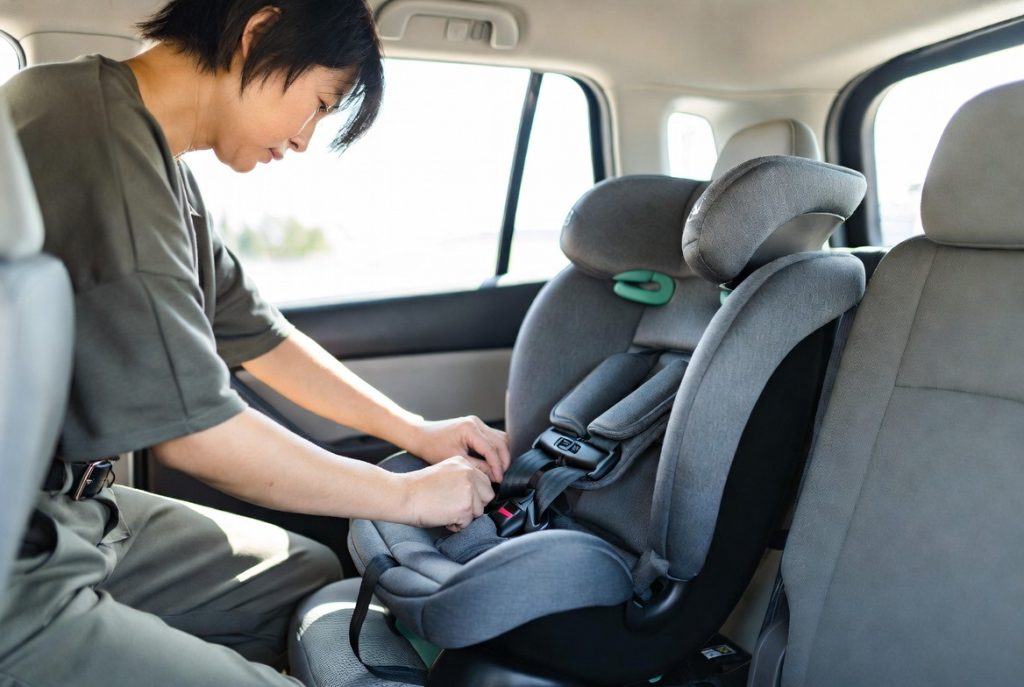
If this article has you thinking about your car seat situation even without a recent accident, take five minutes to verify your LATCH installation this week. Research consistently shows that 40–60% of car seats in the field are installed incorrectly in some meaningful way — the LATCH belt isn’t locked, the recline angle is off, the chest clip is at the abdomen instead of the sternum.
The NHTSA website (nhtsa.gov) maintains a locator for certified Child Passenger Safety Technicians who offer free inspections at fire stations, hospitals, and community events in most metro areas. An inspection takes 20 minutes and costs nothing. If you’ve never had the seat inspected by a technician, schedule one the next time you have a free Saturday morning.
What to do this week: Pull out your auto policy declarations page and look for any language about personal property coverage or car seat replacement. Then take a photo of your installed car seat’s model label (on the underside) and store it in your phone’s photos — if you ever need to file this claim in a hurry, having the documentation already done is the difference between a five-minute call and a frustrating one.
Ready to put this to work? Pull your current declarations page and compare it against these benchmarks — or run a fresh quote to see where the market has moved since your last renewal.
Last modified: February 17, 2026
About the Author: Alex Morgan