
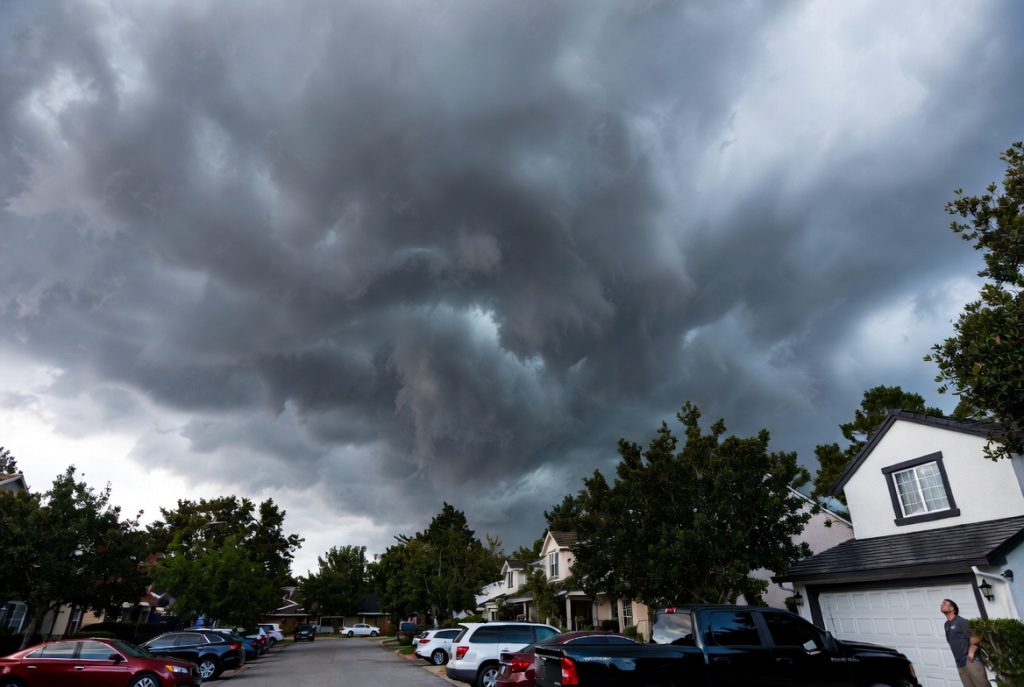
Hail season is statistically expensive — hail damage accounts for roughly $8–$14 billion in U.S. auto insurance claims in a typical year — and it is almost entirely covered by comprehensive. But “almost entirely covered” still means a deductible, a trip to a body shop with a six-week backlog, and a rental car gap if your coverage has limits. A 24-hour window of preparation, when a storm is forecast, can save you all three. Here’s how suburban families navigate it.
Why Hail Is the Suburban Driver’s Quietest Claim Driver
Hail gets less attention than collision because it doesn’t feel like an accident — it’s something that happens to you, not something you caused. But the claim frequency is significant. In hail-prone corridors (the corridor running from Texas through Nebraska sees the highest concentration, but significant events happen in the Midwest, Southeast, and Mid-Atlantic regularly), homeowners with multiple vehicles in the driveway face a meaningful statistical probability of a hail claim in any given decade.
The average hail claim in the U.S. runs approximately $4,300 per vehicle. A family with two cars in the driveway during a 1-inch hail event could be looking at $8,000–$10,000 in damage. Comprehensive covers it — minus your deductible. If your deductible is $500 per vehicle, you’re absorbing $1,000 before any checks are written. If it’s $1,000 per vehicle, you’re absorbing $2,000 for a single afternoon’s storm.
24 Hours Before: Practical Prep
The forecast is the early warning system. The National Weather Service issues severe thunderstorm watches that include hail probability 12–24 hours in advance in most cases. When a storm watch mentions hail of 1 inch or larger, treat it seriously.
Garage triage
If you have garage space, use it. Move the higher-value vehicle inside first, then the second. This seems obvious, but the most common post-storm regret among multi-car families is that they had a two-car garage with one car inside and one outside, and the outdoor car caught the brunt of it. Prioritize by value, not habit or convenience.
Covered parking alternatives
If your garage is unavailable, scout alternatives in advance: parking structures, carports at commercial lots, covered parking at your workplace if it’s accessible. Having a mental inventory of covered parking within a mile of your home takes about 10 minutes and pays off in the first serious storm you use it.
Hail protection covers
Hail blankets — padded fabric covers that drape over the vehicle — have improved substantially in the past five years. Foam-core covers with tie-down straps can handle 1.5-inch hail with minimal damage in most cases. They run $100–$250 for a full-vehicle cover. Soft fabric covers (think quilted material) are cheaper but less effective above 3/4-inch stone. If you live in a hail corridor and a garage isn’t an option, a quality cover is worth the investment.
When the Garage Is Full: Triage Decisions
The realistic suburban situation: two-car household, one-car garage packed with bikes, a chest freezer, and the overflow from the last garage sale. One car fits, one doesn’t. Here’s how to make the triage call.
- Insure your coverage levels first. If one vehicle carries comprehensive and the other doesn’t, protect the comprehensive-covered vehicle inside — a claim against the uninsured vehicle costs you nothing in premiums and nothing in claims. A claim against the comprehensive-covered vehicle costs your deductible.
- Protect the newer or higher-value vehicle. Dent repair on a five-year-old sedan is a cosmetic inconvenience. Dent repair on a $45,000 vehicle involves paintless dent repair at body shops that may not be able to restore the factory finish on newer metallic colors. Depreciation impact on a newer vehicle from hail-related blemishes can also affect resale value in ways that a comparable-sized hit on an older vehicle doesn’t.
- The “roof vs. vehicle” calculation. If you have a carport or a neighbor with space, ask. In established neighborhoods, asking a neighbor to share garage space during a storm warning is a normal request and usually gets a yes.
After the Storm: Documentation
Walk the vehicle before you move it. Photograph the roof, hood, and trunk lid — these are the primary hail impact zones — in direct light. Look for multiple small round depressions (hail dents) as opposed to a single impact point (that’s debris). Photograph the windshield separately; hail cracks are sometimes covered under glass coverage rather than comprehensive, with a different (often zero) deductible depending on your policy.
When you call your carrier, use the word “comprehensive” explicitly. File a single comprehensive claim for hail damage, not collision. The claims experience — surcharge implications, rental coverage, repair timeframes — can differ significantly between claim types. Hail claims filed under comprehensive in most states do not count against your at-fault driving record and do not trigger the same surcharge mechanisms as collision claims.
Body shop wait times after a regional hail event can run four to eight weeks. If your policy includes rental reimbursement, confirm the daily limit and the number of covered days before the car goes in. Many families discover their rental limit ($30/day, 30 days) doesn’t match the actual cost of a rental ($55/day at current rates) or the actual repair timeline.
What to do this week: Check your comprehensive deductible on your declarations page. If it’s $1,000 or higher, ask your agent what it costs to lower it to $500 — that conversation sometimes surprises people. Then do a quick inventory of your covered parking options and identify where the hail blanket (or the neighbor) is.
Ready to put this to work? Pull your current declarations page and compare it against these benchmarks — or run a fresh quote to see where the market has moved since your last renewal.
Last modified: February 20, 2026
About the Author: Alex Morgan