
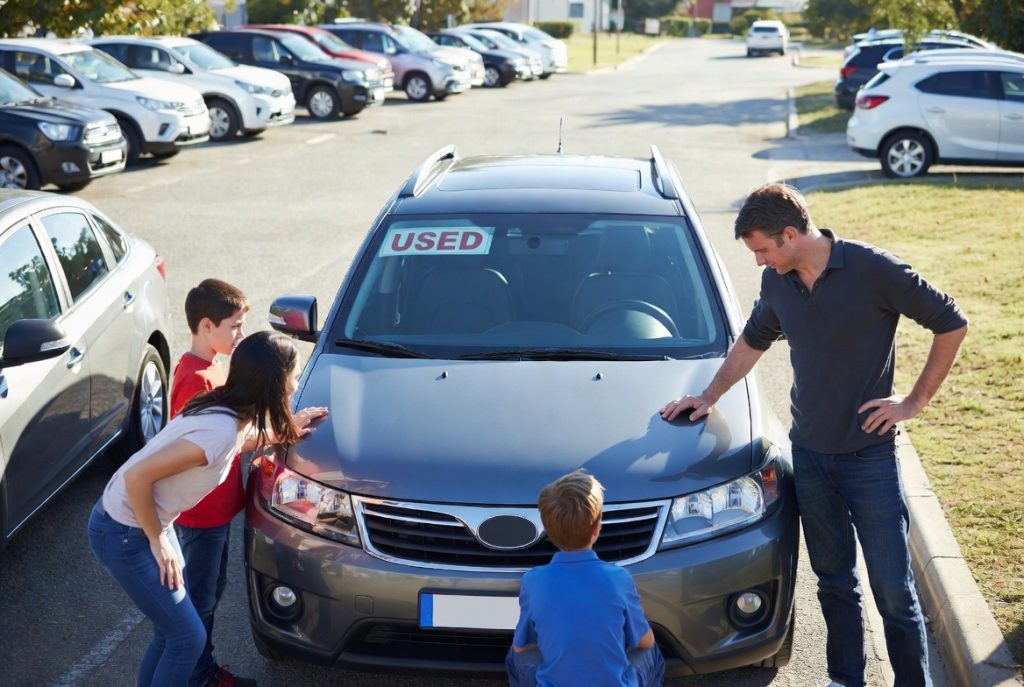
Most families pick the second car based on price, reliability ratings, and the Craigslist listing that happened to appear. A surprisingly small detour through insurance costs — before you put a deposit down — often rearranges the shortlist. The difference between two similarly priced vehicles in insurance cost can run $300–$700 per year, compounded over the life of a car you plan to keep for eight years.
The 10-Minute Insurance Pre-Shop
Before you fall in love with a specific vehicle, take the make, model, year, and trim level through a quick insurance pre-screen. Two approaches work well.
The first is to call your current carrier and ask for a “what if” quote: “If I added a 2019 Honda CR-V EX to my current policy, what would my premium change be?” Most agents can pull this estimate in under five minutes and will tell you the incremental cost without binding you to anything. Do this for two or three vehicle candidates before you make your shortlist.
The second approach — useful if you’re shopping across multiple carriers — is to run a preliminary online quote. You’ll need the VIN or at minimum the year, make, model, and trim. The preliminary quote won’t be your final rate (it’ll be refined once you provide your license, driving history, and garaging address), but it’ll give you a comparative ranking of your candidates.
The goal isn’t to find the cheapest car to insure; it’s to know the insurance cost before it surprises you at the dealership.
Three Categories of Vehicles That Quietly Cost More
High-theft-rate models. The Highway Loss Data Institute (HLDI) publishes vehicle theft data by make, model, and model year. Certain trucks and SUVs have theft rates that are two to four times the average for their class. High theft rates translate directly into higher comprehensive premiums. If you’re buying a full-size pickup in a metro area, the theft surcharge is real and worth knowing.
Expensive-to-repair vehicles. A used luxury sedan priced affordably at purchase can carry parts and labor costs that make collision and comprehensive expensive to carry. European luxury vehicles — BMWs, Audis, Mercedes from the mid-tier down — frequently fall into this category. The vehicle depreciates; the repair costs don’t. Carriers rate this risk and price it into your collision premium.
Sporty trim levels on otherwise ordinary platforms. A Honda Accord Sport and a Honda Accord LX are nearly identical from the outside, but the Sport trim often carries a higher collision loss ratio because the drivers who buy it tend to drive it more aggressively. Trim-level differences in insurance cost are real and specific — ask for a quote on the exact trim, not just the model line.
Three That Quietly Cost Less
Mid-size sedans with good safety equipment. Vehicles with a full suite of modern safety features — automatic emergency braking, lane departure warning, and backup cameras — often qualify for safety discounts that partially offset their base rate. A 2018–2020 Toyota Camry or Honda Accord with driver-assist technology in this cohort tends to be one of the more cost-effective vehicles to insure in its price bracket.
Minivans. The demographic that buys minivans tends to be lower-risk by actuarial profile, and carriers know it. Minivans have among the lowest collision loss ratios in the passenger vehicle market. If you’re resistant to the minivan primarily on aesthetics and insurance cost is a factor, the math is unambiguous.
Older vehicles you plan to carry liability-only. If the vehicle you’re buying is worth less than $5,000–$6,000 at current market value, carrying full coverage may not make financial sense. A carrier will pay you no more than actual cash value on a totaled vehicle, so comprehensive and collision on a $4,500 car costs you money relative to the maximum possible payout. Liability-only on an older vehicle significantly reduces the insurance cost of that vehicle.
How to Get a Binding Quote Before You Buy
Once you’ve identified the vehicle and have the VIN, you can get a fully underwritten quote from your carrier before you sign the purchase agreement. This is not the same as the preliminary estimate — it’s the actual rate, subject to your credit, driving record, and the vehicle’s specific history. It takes 15–20 minutes.
Why this matters: some vehicles have a history of prior damage that affects insurability. Some are flagged in CLUE (Comprehensive Loss Underwriting Exchange) as having had prior claims. Carriers sometimes rate a vehicle with a prior total loss or salvage title differently, or decline to write comprehensive coverage on it at all. Knowing this before you sign avoids a situation where you’ve purchased a car you can only insure for liability.
What to Do This Week
- If you have a vehicle shortlist, call your carrier with the make, model, year, and trim level of each candidate and ask for a “what if” quote for each. Write the numbers down.
- Look up each candidate’s HLDI theft and collision loss data — the HLDI website makes this publicly searchable by make, model, and model year.
- Before you put a deposit down, run a VIN check (Carfax or AutoCheck) and note whether any prior total loss or major structural damage is on record.
- Confirm with your carrier whether the new vehicle will be subject to a different deductible or coverage structure than your existing vehicle, especially if it’s significantly older.
Ready to put this to work? Get a quote on your shortlisted vehicles before you visit the dealership — or run a full comparison to see whether your current carrier is competitive on multi-vehicle households.
Last modified: April 9, 2026
About the Author: Alex Morgan