A tidy garage doesn’t trigger an auto discount line item. There’s no box on a rate sheet that says “organized storage” next to a 3% reduction. But it changes three things that quietly affect your annual premium and your claim experience — and one of them can shave a meaningful amount off your renewal without you ever calling your agent. Here’s the real connection, and what’s actually worth your Saturday morning.
The Discount That Doesn’t Exist (and the One That Does)
Let’s clear up the most common version of this claim first. Some websites suggest that keeping your car in a garage directly earns you a garaging discount. The truth is more specific than that.
Most carriers do ask where you primarily park your vehicle overnight during the quoting process. The options are typically: on the street, in a driveway, or in a garage. Vehicles listed as garaged tend to rate slightly better — not because of any cleanliness assumption, but because statistically they face fewer vandalism claims, lower weather-related comprehensive losses, and reduced theft exposure. The discount, where it exists, is typically 2–5% on the comprehensive portion of your premium.
What the carriers aren’t asking is whether the garage is actually usable. If your garage is packed to the ceiling with holiday bins and sports equipment and the car lives in the driveway anyway, you’re rating it as garaged and accepting the exposure of a driveway-parked vehicle. That’s not fraud in any meaningful sense — but it is a gap between how you’ve answered the question and what’s actually happening.
Three Indirect Ways Garage Habits Change Your Rate
1. Comprehensive claims from weather and theft
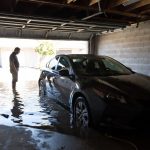
This is the most direct connection between your garage situation and your premium. Comprehensive coverage pays for damage from hail, wind, falling trees, flooding, and theft. A vehicle that sleeps inside your garage avoids the overwhelming majority of these exposures. Hail alone costs the U.S. insurance industry an estimated $8–$14 billion per year in auto claims — and nearly all of it hits cars parked in driveways and lots.
A single comprehensive claim — even a small one under $3,000 — can raise your renewal premium by 8–12% for three years depending on your carrier and state. That’s potentially $400–$900 in cumulative surcharges from a single storm event that a clear garage could have prevented.
2. Cosmetic damage from clutter
Parking in a crowded garage creates its own risk: door dings from the workbench, scratches from bicycles leaning against the quarter panel, mirror clips from squeezing past the chest freezer. These are nuisance damages individually — but the claims behavior they drive can be costly.
Families who file two or more comprehensive or collision claims within a three-year window are reclassified as higher risk by many carriers, regardless of whether any single claim was large. The clutter-to-scratch-to-small-claim pipeline is more common than most people acknowledge.
3. How you answer the “garaging” question at renewal
If your car genuinely starts living inside your garage because you’ve cleared the space, and it wasn’t before, you have standing to call your agent and update your garaging status. That conversation — which takes about four minutes — can result in a modest but real premium adjustment. The habit change enables the administrative fix.
A Weekend Reset That Pays for Itself
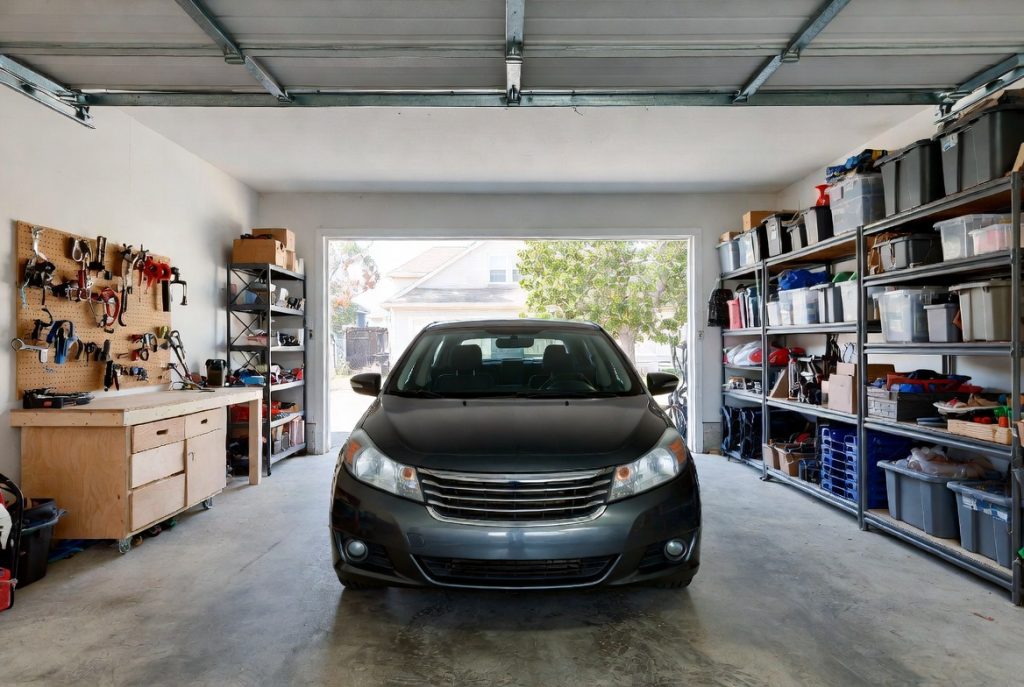
You don’t need a renovation. You need one cleared lane for one car. Here’s a framework that works in a single Saturday:
- Stage 1 (1 hour): Remove everything that belongs inside the house. This is usually 30–40% of what’s in a typical suburban garage and takes one trip per family member.
- Stage 2 (1 hour): Move seasonally used items — lawn equipment, holiday decorations, camping gear — to wall-mounted shelving or ceiling storage. A basic wall bracket system costs $80–$150 and recovers more floor space than most families expect.
- Stage 3 (30 minutes): Pull the car in and identify any remaining interference points. A tennis ball hung from the ceiling on a string is a $2 parking guide that prevents 90% of forward-collision clutter incidents.
If you complete that process and the car is genuinely garaged for the first time, your next step is a five-minute call to your agent. Update the garaging address if needed, confirm your comprehensive deductible level, and ask whether a security endorsement is worth adding now that the car is in an enclosed space.
What to do this week: Go stand in your garage and honestly assess whether your car could park there tonight. If the answer is no, block two hours this weekend. If the answer is yes but it isn’t actually parked there, ask yourself what that’s costing you every renewal cycle.
Ready to put this to work? Pull your current declarations page and compare it against these benchmarks — or run a fresh quote to see where the market has moved since your last renewal.
Last modified: February 5, 2026
About the Author: Alex Morgan