
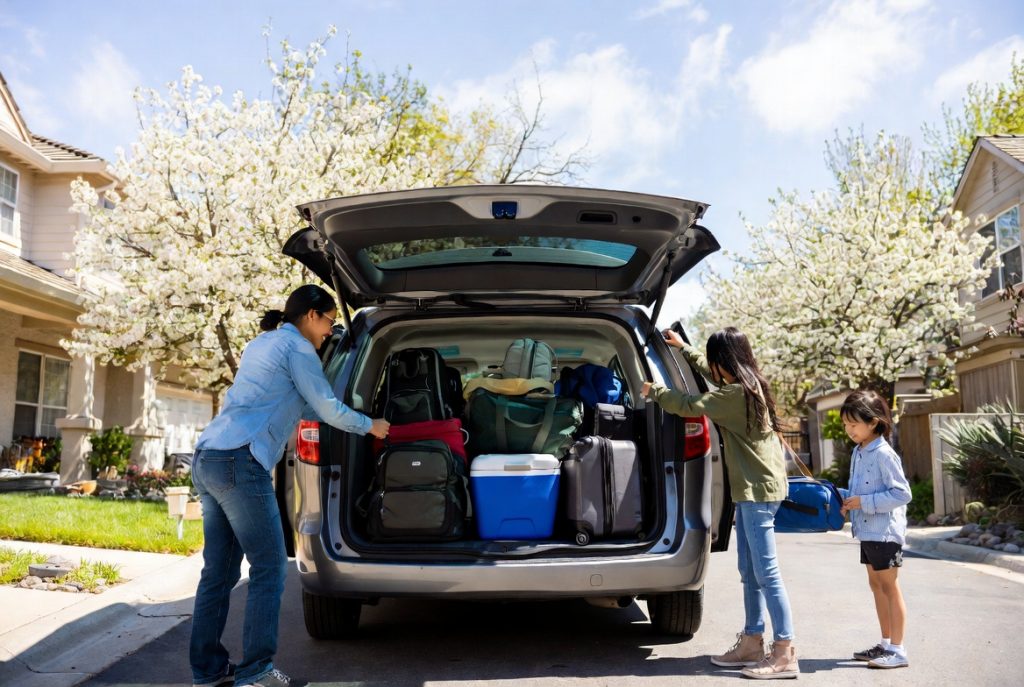
Most spring break drives are fine. The ones that aren’t tend to share three or four patterns — and most of those are solved by a 30-minute checklist the week before. These 10 items aren’t about turning a vacation into a compliance exercise. They’re about not discovering a gap in your coverage while you’re standing on the shoulder of an interstate six states from home.
Before You Go
1. Confirm your roadside assistance reach
Standard roadside assistance through your carrier covers towing, jump starts, and lockout service — but the coverage limits vary. Some policies cover towing to the nearest “qualified repair facility,” which may be fine in a metro area and frustrating on a rural stretch of highway. If you’re driving more than 200 miles from home, verify that your roadside contract covers the full towing distance to the destination of your choice, or that a trip interruption benefit kicks in after a defined breakdown period. AAA memberships, credit card travel benefits, and manufacturer roadside programs (like Ford Roadside Assistance or Toyota Care) each have their own rules. Know which one you’re relying on before you need it.
2. Check out-of-state liability minimums
Your auto policy typically includes a clause that automatically adjusts your liability limits to the minimum required by the state you’re driving through. This sounds protective — and it is, but only up to a point. If you’re currently carrying your home state’s minimum liability limits (which may be quite low), that automatic adjustment doesn’t increase your coverage; it just ensures compliance. If you’re crossing into states with higher minimums and you’re already carrying solid limits, this doesn’t change your coverage at all. The point: know your current limits and whether they’d actually protect your family if you caused a serious accident far from home.
3. Verify rental car backup
If your vehicle breaks down and needs an overnight repair, your policy may or may not cover a rental car. Rental reimbursement coverage is typically an add-on, not a standard feature. Check your declarations page. If you have it, know the daily limit (often $30–$50/day) and how long it lasts (often 30 days). If you don’t have it, your credit card may provide coverage for rentals — but that’s different from covering you when your own vehicle is in a shop.
4. Do the pre-departure photo walkaround
Before you load the car, take a slow walk around it and photograph every panel, bumper, and wheel. Do this at the start and end of the trip. If a hotel valet damages the car, if a beach parking lot door-ding happens, or if someone backs into you in a resort parking garage and drives away, you have timestamped documentation of the vehicle’s pre-trip condition. This takes four minutes and has saved families significant headaches in disputed claims situations.
5. Square away hotel valet coverage
When you hand your keys to a valet, your vehicle is covered under the hotel’s liability for negligent damage — if the valet dents your car, the hotel’s commercial auto policy should respond. Your own auto policy remains secondary. The issue: hotels frequently dispute whether damage occurred on their property versus before or after. The pre-trip photo documentation above is your best evidence. If you choose to self-park to avoid this ambiguity, some resort hotels charge the same rate either way — worth asking at check-in.
On the Road
6. Manage the usage-based policy disclosure
If you’re enrolled in a telematics or usage-based insurance program, a long-distance spring break drive may affect your program data. Scores based on hard braking, high-speed driving, and late-night miles can shift after a high-mileage trip week. Some programs have a data-smoothing mechanism; others don’t. If you’re near a discount threshold, this is worth knowing in advance. You’re not going to change your driving to protect a UBI score, but you might adjust your expectations at renewal.
7. Establish the family check-in protocol
A non-insurance item, but one that becomes relevant quickly: if you have a serious breakdown or accident and are unreachable, who knows your itinerary? Leave your planned route, hotel names, and estimated arrival times with a family member or close friend who stays home. This is old-fashioned trip planning, but it’s the information a first responder or insurance company may ask a family member for in an emergency.
8. Know the rental car gap if you’re renting at the destination
If you’re flying to a destination and renting a car on arrival, your personal auto policy typically extends collision and liability coverage to domestic rental cars — but it may not cover loss of use charges or administrative fees that rental companies charge when a car is in the shop after an accident. Your credit card’s car rental protection may cover those gaps, but the rules vary by card. Read the coverage summary before you decline the rental company’s collision damage waiver at the counter, not after.
The Return Leg
9. Update your odometer for any mileage-based policies
If you’re on a low-mileage policy or pay-per-mile plan, a spring break drive of 2,000 miles round trip is a meaningful mileage event. Log the odometer reading before and after. If your policy has a mileage cap and you’re close to it, your carrier may need to be notified. Over-mileage on a pay-per-mile plan doesn’t typically void your coverage, but it may trigger a billing adjustment. Better to know now than to get a retroactive charge at renewal.
10. Do the post-trip inspection
When you return home, do another slow walkaround. Compare against your pre-trip photos. If there’s new damage — a stone chip on the windshield, a parking lot scrape that crept up while you were unloading at the beach — you now have a clear window to attribute when and roughly where it happened. For small items, you’ll likely pay out of pocket. For larger items, you’ll want the documentation when you call your carrier.
What to Do This Week
- Pull your declarations page and verify that roadside assistance and rental reimbursement are listed as covered endorsements.
- Check your roadside assistance daily limit and duration, plus whether your credit card travel benefit duplicates or supplements it.
- Do the pre-departure photo walkaround the day before you leave, not while the kids are in the car and you’re 20 minutes late.
- If you’re renting a car at the destination, read your credit card’s rental car coverage summary — it’s usually in the benefits guide, not on the card itself.
Ready to put this to work? Run a quick review of your coverage add-ons before you hit the road — or compare quotes to make sure you’re carrying the right package for a family that travels.
Last modified: March 31, 2026
About the Author: Alex Morgan